
ETF investing has become one of the most widely used approaches in modern markets, shaping how individuals and institutions allocate capital. At its core, ETF investing refers to investing through an exchange traded fund (ETF), a market-listed vehicle that holds a defined basket of securities and trades throughout the day on a stock exchange. This structure allows investors to gain diversified or targeted exposure through a single, transparent instrument.
An exchange traded fund can track broad equity markets, specific sectors, fixed-income strategies, commodities, or more specialized investment themes. Each ETF follows a clearly defined set of rules that determines what it holds and how it behaves, making it a predictable and efficient building block within a portfolio. Over time, this rules-based design has made ETFs a preferred tool for both long-term allocation and tactical positioning.
Understanding what is ETF investing requires more than knowing that ETFs trade like stocks. It involves understanding how an exchange traded fund is constructed, how its benchmark shapes risk and return, and how factors such as weighting, liquidity, and tracking accuracy affect outcomes. These fundamentals determine how ETFs function within a disciplined investment strategy.
Key Takeaways
- What ETFs are → ETF investing means owning a single fund that holds many assets, such as stocks or bonds, and trades on a stock exchange throughout the day.
- What you own → An ETF’s performance comes from its underlying holdings and how they are weighted, not from its name or theme.
- Why costs matter → Low fees support long-term returns, but tracking quality and liquidity also play a meaningful role in performance.
- How ETFs trade → ETFs can be bought and sold like stocks, but their pricing reflects the liquidity of the assets inside the fund.
- How to use ETFs → ETFs are most effective when combined deliberately and aligned with clear investment goals.
How Exchange Traded Funds Work
An exchange traded fund is a pooled investment vehicle that holds a defined basket of assets and issues shares that trade on a stock exchange. When you buy an ETF, you are not buying individual securities directly. You are buying a share of the fund, which represents proportional ownership of everything it holds.
Most exchange traded funds are built around a clear set of rules. These rules determine which assets are included, how they are weighted, and when changes are made. Because the process is systematic, ETFs are designed to closely reflect the behavior of the market or strategy they follow, rather than rely on ongoing discretionary decisions.
At the center of how ETFs function is a mechanism that keeps prices aligned with underlying value. Large financial institutions known as authorized participants can create or redeem ETF shares in exchange for the underlying assets. This process helps ensure that ETF prices remain closely tied to the value of what the fund owns.
Unlike traditional mutual funds, exchange traded funds are bought and sold on stock exchanges such as the New York Stock Exchange and the London Stock Exchange, just like individual company shares. Their prices move throughout the trading day based on market supply and demand, allowing investors to buy or sell ETF shares at any time while the market is open.
At a practical level, ETFs work because they combine several features in one structure:
- 📦 Pooled ownership of many securities inside a single fund
- 🔁 Intraday trading on stock exchanges, similar to individual shares
- ⚖️ Price alignment through creation and redemption activity
- 🔍 Ongoing transparency, with most holdings disclosed daily
Together, these elements allow ETFs to function as efficient, flexible building blocks within a portfolio. Their design supports both long-term investing and more precise exposure, while keeping structure and behavior visible to the investor.
Key Advantages of ETF Investing
The appeal of ETFs goes far beyond simply tracking major market indexes. Their flexible design allows for many investment strategies and specific focus areas. This versatility is a key reason why Exchange Traded Funds have become essential for various investor goals.
Here are the main advantages of using ETFs:
- Broad Diversification: ETFs instantly spread your money across many investments. These can be in different industries, countries, or types of assets. This helps lower the specific risk linked to any single stock or bond. Large market ETFs, such as the Vanguard Total Stock Market ETF (VTI) or S&P 500 ETFs like the Vanguard S&P 500 ETF (VOO) and SPDR S&P 500 ETF Trust (SPY) (often called Core ETFs), offer excellent basic portfolio diversity.
- Lower Costs: As mentioned, ETFs generally have much lower operating expense ratios and Management Expense Ratios than actively managed funds. This makes them a cost-effective investment choice.
- Flexible Trading: Unlike mutual funds, which trade only once a day after the market closes, ETFs trade like stocks on exchanges throughout the day. This means you get real-time prices and the freedom to buy or sell at market prices any time the market is open.
- Accessibility and Low Minimums: ETFs are easy to buy through most brokerage accounts. They often have a low investment minimum, letting you buy even one share. This makes sophisticated diversification available to more people.
- Tax Efficiency: Because of how they are structured, ETFs tend to pass on fewer taxable capital gains to investors compared to traditional mutual funds. This can mean greater tax efficiency for your investment accounts.
- Strategic and Targeted Exposure: Beyond covering broad markets, ETFs are highly useful tools for making precise investment decisions, focusing on specific industries, or spreading investments globally. Smart investors increasingly use ETFs for:
- Tactical overweights: Betting more on certain industries like energy, tech, or defense when market signals suggest it.
- Factor exposure: Focusing on investment characteristics like low-volatility, value, or momentum.
- International plays: Investing in global markets, with options that protect against currency changes.
- Fixed-income strategies: Balancing different types of bonds to meet specific income and risk goals, using fixed-income ETFs or Short-term ETFs that hold money-market instruments.
- Commodity exposure: Investing in raw materials like gold (e.g., a physically-backed ETF holding gold bars) or oil (often through futures contracts).
- Specialty themes: This includes ESG ETFs for socially responsible investing, and cryptocurrency ETFs like Bitcoin ETFs for regulated access to digital assets.
What Are Potential Downsides of ETF Investing
While ETF investing offers clear and significant benefits, a balanced view requires acknowledging certain details and situations where they might not be the perfect fit for every investor or every plan. It is essential to understand these aspects to make truly informed decisions.
Here are some key considerations and potential downsides of ETFs:
- Index crowding risk: Many ETFs that are weighted by company size tend to put more money into stocks that are already expensive. This can create risky valuations in certain parts of the market, especially when a few large companies grow very fast. This can expose investors to higher risk during market downturns.
- Liquidity mirage: ETF shares might seem very easy to buy and sell, with lots of trading activity. However, the ease of trading the ETF shares does not always perfectly match how easy it is to trade the actual investments held inside the ETF. This is particularly true for ETFs that hold investments in less active markets, such as high-yield bonds or emerging market debt. During sudden market selloffs, the difference between buying and selling prices for the ETF can become much larger, making trades more costly or difficult at good prices.
- Tracking drift: This is the small difference between an ETF’s performance and the index it tracks. While usually minor for large, popular ETFs, specialized or complex ETFs (like synthetic ETFs that use derivatives) often differ more from their benchmarks. This can happen because of fees, how the fund picks its investments, or costs from adjusting its holdings.
- Passive does not mean risk-free: Buying the market through an ETF does not remove all risk; it simply groups risks differently. You are still exposed to larger market cycles, global political changes, and imbalances in different industries. The idea that passive investing is completely “safe” can be misleading. It means accepting market risk, which can still lead to significant changes in your investment’s value.
- Trading costs: While the Management Expense Ratios of ETFs are generally low, because they trade like stocks on exchanges (like the Chicago Board Options Exchange (CBOE)), you pay brokerage fees each time you buy or sell shares. For investors who trade very often or invest small amounts regularly, these costs can add up and reduce returns, possibly canceling out the benefit of low ongoing fees.
- Complexity of specialized ETFs: The rapid increase in very specialized or complex ETFs, such as synthetic ETFs that use things like futures contracts to track an index, or leveraged and inverse ETFs, means that not all Exchange Traded Funds are suitable for the average investor. These products carry much higher risks and are designed for advanced strategies. This highlights how important it is to fully understand an ETF’s holdings and how it works before investing.
Who Should Consider ETF Investing (and Who Might Reconsider)
ETF investing is well suited to investors who value clarity, structure, and long-term consistency. Exchange traded funds work best when they are used as part of a deliberate plan rather than as short-term trading vehicles.
For many investors, ETFs are an effective way to build and maintain diversified portfolios without the need for constant oversight. They are commonly used by individuals who want broad market exposure, predictable behavior, and transparent holdings, whether they are investing on their own or working with an adviser.
ETF investing is typically a good fit for:
- Long-term investors building diversified portfolios over time
- Asset allocators who want clear exposure across markets and asset classes
- Cost-conscious investors focused on minimizing ongoing fees
- Global investors seeking access to international markets and sectors
That said, ETFs are not ideal for every situation. Investors who trade very frequently may find that transaction costs and bid-ask spreads reduce returns. Others may expect ETFs to outperform the market, rather than reflect it, which can lead to unrealistic expectations.
ETF investing may require extra caution for:
- Short-term traders who rely on frequent buying and selling
- Alpha-seekers expecting outperformance from index-based products
- Hands-off investors who do not review holdings or structure
Understanding whether ETF investing aligns with your goals, time horizon, and expectations is essential. When used appropriately, exchange traded funds can be powerful tools. When misunderstood, they can create unintended exposure and risk.
Examples of ETFs
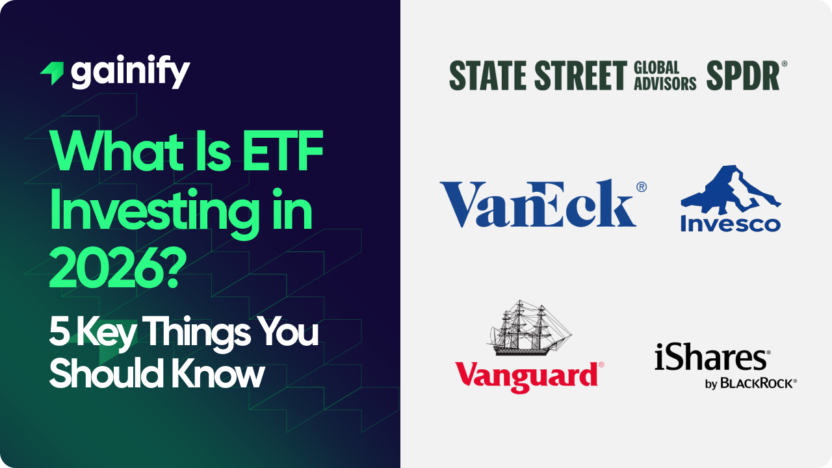
Here are some of the largest and most widely used ETFs, known for their low costs and broad market exposure. These examples are primarily U.S.-focused, as they represent some of the biggest options available to investors globally. Note that Vanguard, BlackRock and State Street are prominent providers of ETFs.
Fund Name (Ticker) | Type (ETF/Mutual Fund) | Tracks Index | Expense Ratio | Assets Under Management (AUM) | Key Characteristics |
SPDR S&P 500 ETF Trust (SPY) | ETF | S&P 500 | 0.0945% | $638 billion | One of the oldest and most liquid S&P 500 ETFs, often used by institutional investors. |
Vanguard S&P 500 ETF (VOO) | ETF | S&P 500 | 0.03% | $684 billion | Extremely low cost, broad market exposure to the 500 largest U.S. companies. |
iShares Core S&P 500 ETF (IVV) | ETF | S&P 500 | 0.03% | $628 billion | Competitively priced, highly diversified, similar to VOO. |
Vanguard Total Stock Market ETF (VTI) | ETF | U.S. Total Stock Market | 0.03% | $507 billion | Covers entire U.S. equity market, providing extensive diversification across all sizes. |
iShares Core U.S. Aggregate Bond ETF (AGG) | ETF | U.S. Aggregate Bond | 0.03% | $128 billion | Broad exposure to the U.S. investment-grade bond market across various durations. |
Vanguard Total Bond Market ETF (BND) | ETF | U.S. Aggregate Bond | 0.03% | $131 billion | Diversified across various U.S. bonds, known for its low expense. |
Schwab U.S. Broad Market ETF (SCHB) | ETF | Dow Jones U.S. Broad Stock Market | 0.03% | $34 billion | Tracks a comprehensive U.S. market benchmark index, encompassing a wide range of companies. |
Note: Expense ratios and AUM can change. Always verify the latest information from the fund provider before investing.
Frequently Asked Questions (FAQ)
Q1: What exactly is an Exchange Traded Fund (ETF)?
A1: An ETF is an investment product that holds a collection of financial assets like stocks, bonds, or commodities. It trades on stock exchanges throughout the day, much like a single stock, with real-time pricing. This allows investors to buy or sell shares of the fund at any time during market hours through their brokerage account.
Q2: How do ETFs differ from traditional mutual funds?
A2: The main difference is how they are traded. ETFs trade on exchanges, meaning their price changes throughout the day and you buy/sell them from other investors. Mutual funds are typically bought and sold directly from the fund company at the end of the trading day, based on their Net Asset Value (NAV). ETFs also generally have lower operating expense ratios and often offer greater transparency of holdings.
Q3: Are ETFs only for passive investing?
A3: While most ETFs are designed for passive investing by tracking a specific index (known as index ETFs), there are also active ETFs where a fund manager makes investment decisions to try and outperform the market. The vast majority of popular and low-cost ETFs follow a passive strategy. This distinction is crucial when considering your investment approach.
Q4: What are the main benefits of investing in ETFs?
A4: Key benefits of ETF investing include low costs, broad diversification, flexibility, and transparency. They also offer tax efficiency and often have a low investment minimum of just one share.
Q5: Are there any downsides or risks to ETFs?
A5: Yes, ETFs are not without risks. Downsides can include brokerage fees (if you trade frequently), potential tracking error, and the complexity of highly specialized ETFs, such as synthetic ETFs. All ETFs are also subject to market risk, meaning their value can decrease with overall market downturns or specific liquidity risk in less popular funds.
Q6: Can I use ETFs for specific investment goals, like investing in a particular industry? A6: Absolutely. ETFs are highly versatile. Beyond broad market coverage, you can find sector-specific ETFs that focus on particular industries (like technology or healthcare), geographic regions (like emerging markets), or even specific asset classes like commodities (e.g., a physically-backed ETF holding gold bars) or bonds (fixed-income ETFs including Short-term ETFs that hold money-market instruments).
Q7: How do I choose the right ETF for me?
A7: Choosing an ETF involves considering your investment goals, risk tolerance, and time horizon. For self-directed investors, look at the Management Expense Ratio (lower is generally better), the index it tracks (ensure it aligns with your strategy), its trading volume (for good liquidity), and its past performance (though past performance does not guarantee future results). Many Core ETFs also offer Distribution Re-Investment Plans for automatic investing. Consulting with a financial adviser and using financial planning tools can also be beneficial.
Putting ETF Investing Into Perspective
ETF investing has become a core part of how modern portfolios are built. Exchange traded funds offer a structured way to access markets with transparency, liquidity, and cost efficiency, while allowing investors to scale exposure across asset classes, regions, and strategies.
Used thoughtfully, ETFs can simplify portfolio construction without oversimplifying risk. Their effectiveness depends on understanding what they hold, how they are structured, and how they behave across different market conditions. These details matter far more than product labels or short-term performance.
For investors willing to engage with ETF investing at this level, exchange traded funds can serve as reliable building blocks rather than standalone solutions. When aligned with clear goals and a disciplined approach, they provide a flexible framework for long-term investing in public markets.