
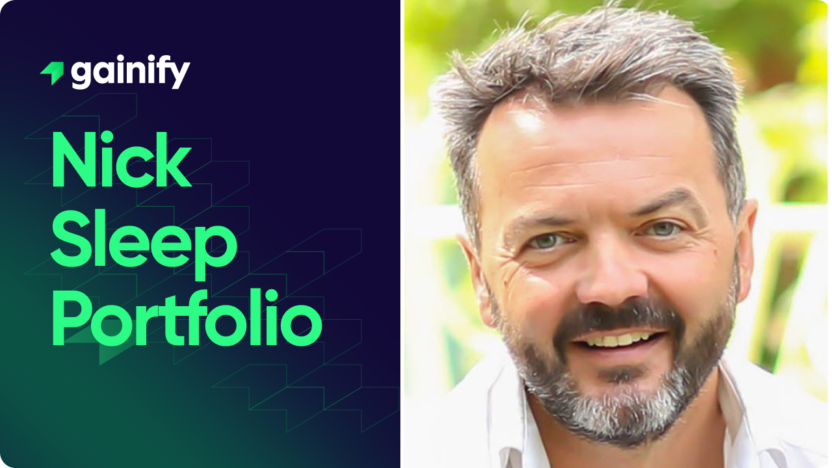
If you’re a long-term investor searching for wisdom that cuts through the noise of Wall Street, few names shine brighter than Nick Sleep. Known for his deep thinking, minimalist approach, and a legendary performance record with the Nomad Investment Partnership, Sleep is widely admired by both seasoned value investors and thoughtful beginners alike.
What made him exceptional wasn’t just his returns – it was his philosophy. And at the center of that philosophy was the Nick Sleep portfolio: a concentrated collection of high-quality businesses designed for long-term compounding.
In this guide, we’ll explore:
- Who Nick Sleep is
- The core principles behind the Nick Sleep portfolio
- His timeless insights from the Nomad Letters
- And what modern investors can learn from his approach
Whether you’re managing your own money or just want to learn from one of the best, the Nick Sleep portfolio offers a masterclass in patience, discipline, and business-first investing.
Who Is Nick Sleep?
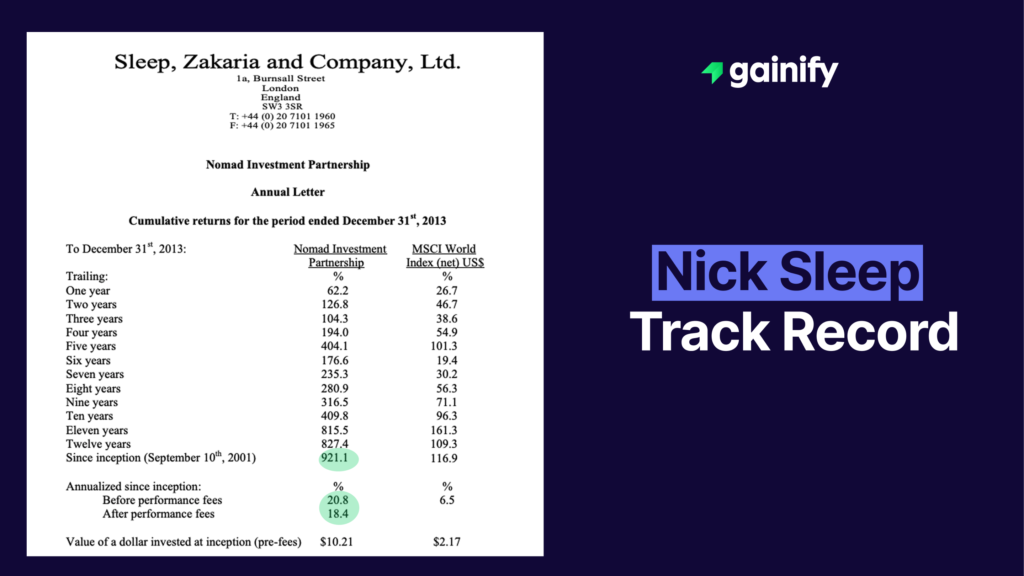
Nick Sleep co-founded the Nomad Investment Partnership in 2001 with Qais Zakaria after leaving Marathon Asset Management. Over roughly a decade, Nomad compounded at an astonishing 20.8% per year before performance fees, significantly outperforming the market, before Sleep and Zakaria voluntarily closed the fund in 2013 to focus on philanthropy.
What made Nomad extraordinary wasn’t just the numbers — it was the mindset behind them.
Nick Sleep wasn’t chasing quarterly earnings or speculating on macro trends. He was quietly building one of the greatest long-term equity portfolios ever assembled, anchored in business quality, patient capital, and simple logic.
Nick Sleep’s Investment Philosophy: Long-Term Thinking with a Radical Simplicity
At the core of the Nick Sleep portfolio was an idea that sounds simple, but is rare in practice: own great businesses and hold them for decades. Sleep often described investing as “passing custody of capital to the right people at the right price.” It wasn’t just about buying stocks. It was about partnering with exceptional operators who could turn compounding into an art form.
In the Nomad Letters, Sleep and his co-manager Qais Zakaria revealed the real edge behind their performance. While most fund managers obsess over quarterly earnings or short-term market noise, Nomad deliberately competed at the long end of the equity yield curve. Their average holding period wasn’t 11 months (like most funds). It was 5, 10, or more years.
They built a strategy designed to harness the full power of long-term compounding.
And here’s what made it radical.
Nomad didn’t rely on inside information, leverage, or complex financial models. Their advantage came from patience, and a focus on fundamental, timeless business drivers like:
- Customer loyalty
- Pricing power
- Scale economics
- Owner-oriented management
- Corporate culture that compounds
The Nick Sleep portfolio was more than a list of stocks. It was a carefully selected group of world-class businesses led by people who thought in decades, not quarters.
Nick Sleep’s Investment Philosophy: 5 Timeless Lessons from a Master Investor
Few investors have left a more lasting intellectual legacy than Nick Sleep. Through the extraordinary performance of the Nomad Investment Partnership and his deeply thoughtful Nomad Letters, Sleep carved out a niche in global investing that prioritizes long-term thinking, simplicity, and trust in high-quality businesses.
Below are five core lessons distilled from Nick Sleep’s philosophy, each one backed by insights from his writing and investing practice.
1. Seek Businesses with Long Reinvestment Runways
Sleep consistently sought companies with the ability to reinvest capital at high returns for extended periods. His core belief was that compounding becomes powerful when the business model allows for capital to be recycled into attractive opportunities year after year.
“Once these businesses are found they can be multiyear winners provided capital allocation remains consistent with value creation.”
— Nick Sleep, Nomad Investment Letter, for the period ended June 30th, 2003
Companies like Amazon and Costco exemplified this principle through scale advantages and reinvestment-driven growth models.
2. Extend Your Time Horizon Beyond the Crowd
While many investors operate on short-term performance cycles, Sleep differentiated himself by focusing on long-duration holdings and long-range thinking. He called it “competing at the far end of the equity yield curve.”
“Only by looking further out than the short-term crowd can we expect to beat them.”
— Nick Sleep, Nomad Investment Letter, for the period ended June 30th, 2003
This mindset helped Nomad avoid unnecessary turnover and allowed compounding to work uninterrupted over many years.
3. Culture as a Tool for Reducing Uncertainty
For Nick Sleep, the primary role of culture was not inspiration or longevity, but making the future more predictable. He focused on companies whose internal behavior reduced the range of possible outcomes, allowing investors to think in probabilities rather than narratives.
“We spend a considerable portion of our waking hours thinking about how company behaviour can make the future more predictable and lower the risk of investment.”
— Nick Sleep, Nomad Investment Letter, for the period ended June 30th, 2005
For Sleep, understanding a company’s values and how they treat customers was often more telling than reading financial statements.
4. Embrace High Conviction Ideas
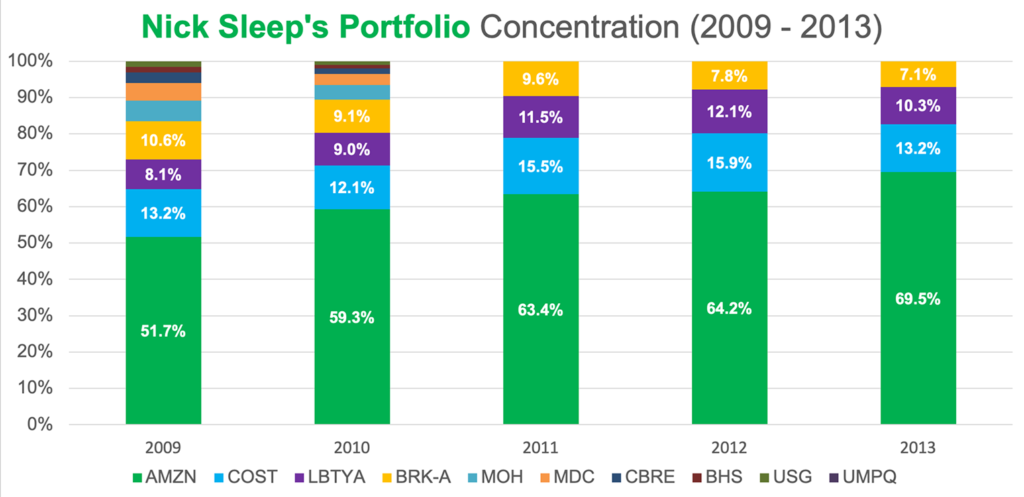
Nick Sleep rejected complexity and over-diversification in favor of depth, clarity, and conviction. He believed that genuinely superior opportunities were rare, and that capital should only be committed when understanding was high and confidence justified concentration. As a result, Nomad’s portfolio was often limited to just a handful of positions.
“In reality opportunities in which we are comfortable to deploy capital are rare, and the highest conviction ideas the rarest of them all.”
— Nick Sleep, Nomad Investment Letter, for the period ended June 30th, 2004
For example, in Q4 2012, 100% of Nomad’s portfolio was concentrated in just four companies: Amazon, Costco, Berkshire Hathaway, and Liberty Global. That level of focus reflected confidence and deep business understanding.
5. Base Decisions on Economic Inputs, Not Market Outcomes
Nick Sleep did not view investing as an exercise in forecasting prices or market cycles. His process began with the economic inputs that determine long-term value: how a business behaves, how capital is allocated, and whether those behaviors are repeatable over time. Market prices were treated as secondary signals, not decision drivers.
“Zak and I concentrate on a deeper reality: the inputs to future value moves.”
— Nick Sleep, Nomad Investment Letter, for the period ended December 31th, 2006
By anchoring decisions in business fundamentals rather than recent performance, Nomad was able to remain patient during periods of volatility. Sleep believed that focusing on outcomes—short-term returns, rankings, or sentiment—encouraged emotional responses, while focusing on inputs promoted rational, repeatable decision-making.
In this framework, markets did not need to be predicted. They only needed to be endured long enough for sound economics to assert themselves.
Final Thoughts
Nick Sleep’s investment philosophy is a powerful reminder that great investing is less about reacting to markets and more about thinking independently, acting with discipline, and maintaining a long-term perspective. His approach, shaped through the Nomad Investment Partnership and detailed in the widely admired Nomad Letters, emphasizes the importance of understanding businesses deeply, trusting in capable management, and allowing time to unlock the power of compounding.
Nick Sleep’s success was built not on complex models or rapid trading, but on a focused portfolio of exceptional companies with strong cultures and durable competitive advantages. His ability to remain patient while others chased short-term results helped Nomad outperform dramatically over time.
By prioritizing simplicity, long-term alignment, and high conviction over diversification for its own sake, Sleep developed a framework that continues to resonate with investors seeking clarity in an often noisy financial world.
For any serious investor, the lessons from Nick Sleep are both timeless and practical. They encourage deeper thinking, greater patience, and the pursuit of quality over quantity.