

Getting started with investing can feel overwhelming.
With thousands of books available, conflicting advice online, and constant market noise, many beginners struggle to find a clear place to start.
The truth is that successful investing rarely begins with complex strategies. It starts with timeless principles: managing risk, understanding how markets work, controlling behavior, and letting compounding do the heavy lifting. The right investing books can provide that foundation far more effectively than short-term tips or trending opinions.
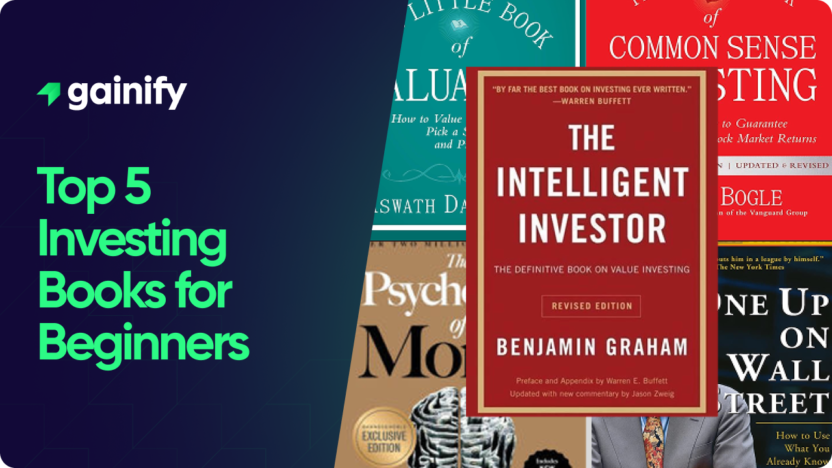
This list highlights the top 5 investing books for beginners in 2026, written by some of the most respected investors and thinkers in finance, including Benjamin Graham, John Bogle, Peter Lynch, Aswath Damodaran, and Morgan Housel. These books focus on building a durable investing framework, covering everything from value investing and index funds to valuation and investor psychology.
Whether you’re investing in individual stocks, mutual funds, or low-cost index funds, these titles offer practical guidance that applies across market cycles and helps you build confidence from day one.
Highlights: Best Investing Books for Beginners
- Focus on timeless investing principles, not short-term market trends or speculation
- Written by legendary investors and thinkers including Benjamin Graham, John Bogle, and Peter Lynch
- Covers both strategy and mindset, from valuation and index funds to investor psychology
- Beginner-friendly yet durable, with lessons that remain relevant as your portfolio grows
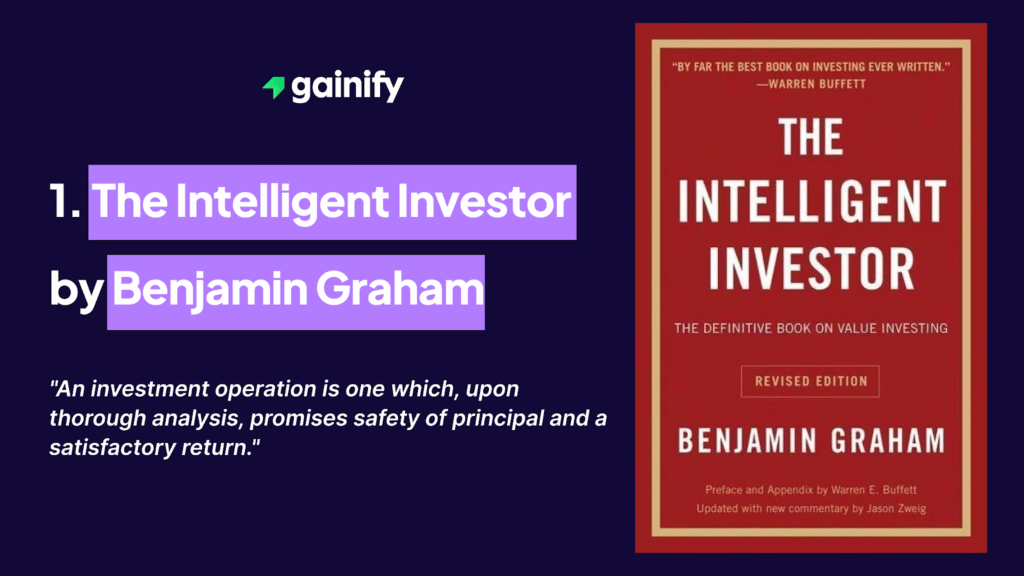
1. The Intelligent Investor by Benjamin Graham
Best for: Long-term strategy, risk management, and value investing fundamentals
Level: Beginner to intermediate
Focus areas: Intrinsic value, margin of safety, investor psychology, market behavior
Overview:
Widely regarded as one of the most famous books in investing, The Intelligent Investor lays the cornerstone for value investing. Co-authored with David Dodd, Graham, mentor to Warren Buffett, presents investing concepts that resist the noise of market corrections and speculation. This is not a how-to on timing the market; it’s a blueprint for preserving capital and seeking a satisfactory return over the long term.
Why it matters for beginners:
Graham’s work transcends the 20th century and remains relevant today, especially for beginner investors trying to filter out hype. It builds the critical foundation for evaluating individual stocks and managing risk, something even experienced investors revisit.
Takeaway quote:
“An investment operation is one which, upon thorough analysis, promises safety of principal and a satisfactory return.”
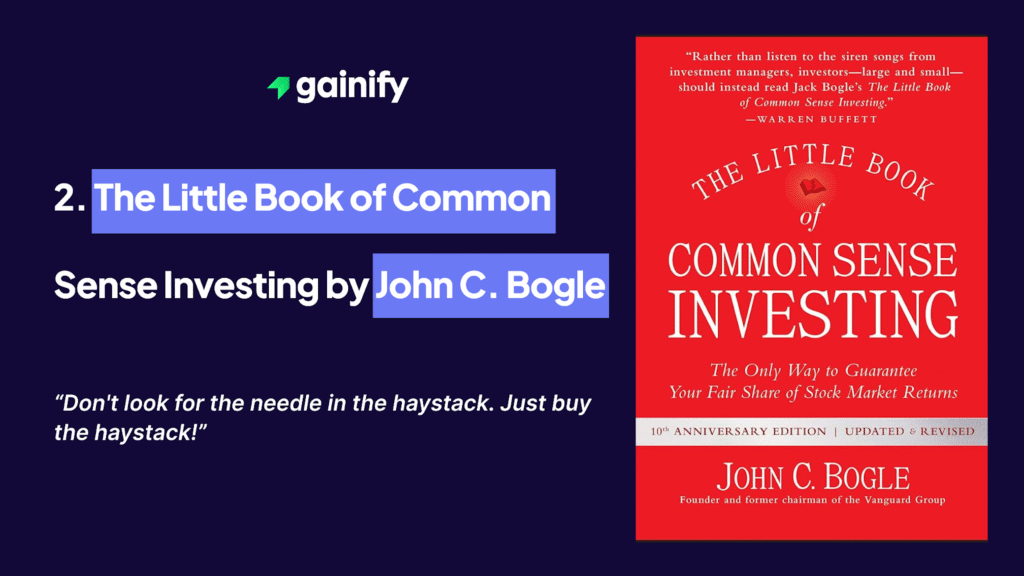
2. The Little Book of Common Sense Investing by John C. Bogle
Best for: Passive investing, portfolio simplicity, and long-term wealth building
Level: Beginner
Focus areas: Index funds, cost-efficiency, compounding, long-term strategy
Overview:
A must-read for anyone interested in mutual fund investing, this book distills the wisdom of Vanguard founder John Bogle. He argues that low-cost index funds consistently beat active fund managers and the average investor due to lower fees and fewer poor investment decisions.
Why it matters for beginners:
Bogle, a key figure in democratizing investing for the masses, helped establish the backbone of modern portfolio theory. His advice has guided scores of investors away from market speculation and toward the simple path to wealth.
Top Quotes:
“Don’t look for the needle in the haystack. Just buy the haystack!”
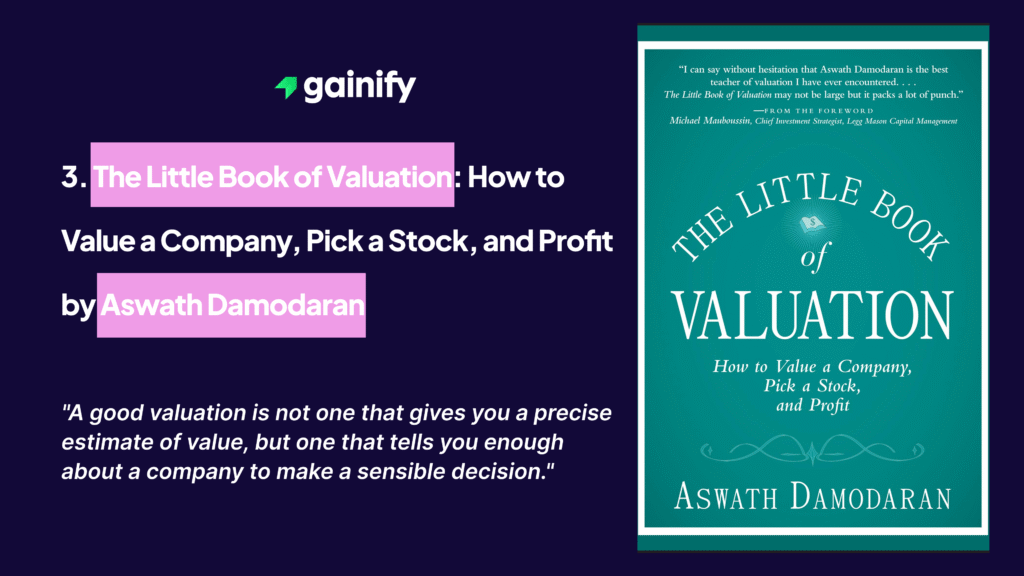
3. The Little Book of Valuation by Aswath Damodaran
Best for: Learning how to value companies and make informed investment decisions
Level: Beginner to intermediate
Focus areas: Valuation methods, intrinsic value, cash flows, business models
Overview:
As a renowned financial theorist and professor, Damodaran breaks down the valuation process into digestible parts. Whether you’re valuing a tech company or an industrial company, the book provides frameworks for identifying quality stocks and understanding fair share prices.
Why it matters for beginners:
This book bridges practical insights with academic rigor, making valuation accessible for those without a background in quantitative finance. It belongs on any investment guide or complete list of essential investment books.
Takeaway quote:
“A good valuation is not one that gives you a precise estimate of value, but one that tells you enough about a company to make a sensible decision.”
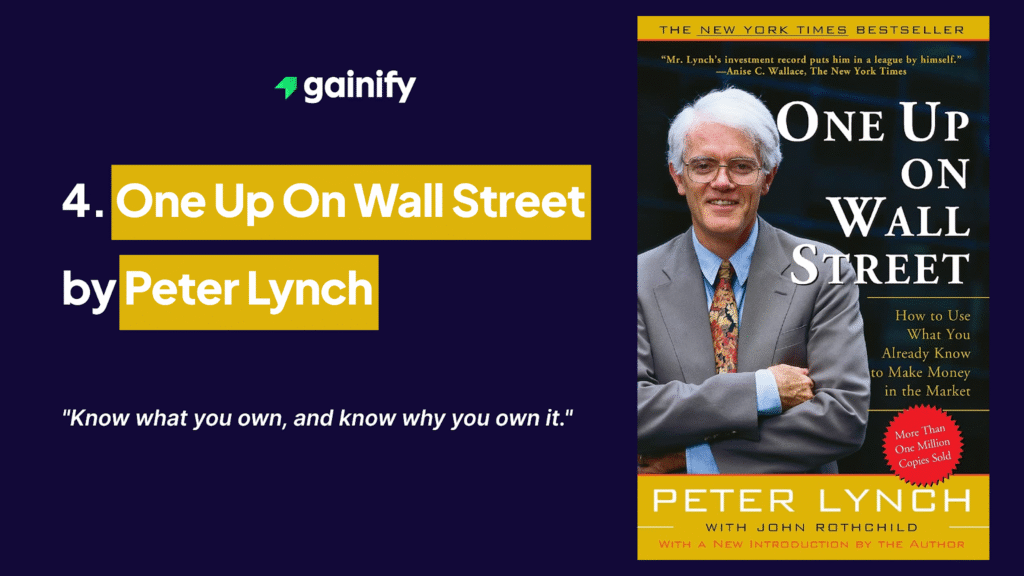
4. One Up On Wall Street by Peter Lynch
Best for: Stock picking and recognizing investment opportunities in everyday life
Level: Beginner to intermediate
Focus areas: Company research, fundamentals, long-term thinking
Overview:
As one of the most successful fund managers in history, Peter Lynch teaches that even the average investor can outperform Wall Street by spotting trends and researching well-known companies. This is particularly useful advice for those interested in stock market success outside of institutional investing.
Why it matters for beginners:
Lynch’s guidance is ideal for those new to stock investing. He underscores that successful investors often find great ideas not through complex algorithms, but through everyday observations
Takeaway quote:
“Know what you own, and know why you own it.”
5. The Psychology of Money by Morgan Housel
Best for: Building the right mindset and understanding the behavioral side of investing
Level: Beginner
Focus areas: Financial behavior, emotion, risk perception, habits
Overview:
This best-selling book brings behavioral economics into focus with memorable stories and timeless investing advice. Housel teaches readers to focus less on timing the market and more on personal behavior, patience, and consistency, skills essential to any investor.
Why it matters for beginners:
Especially for those struggling with student loans, income planning, or emotional investing, this book reshapes how you think about your financial life. It’s a gateway to making better choices even during bad markets or uncertain financial periods.
Takeaway quote:
“Doing well with money has little to do with how smart you are and a lot to do with how you behave.”
Final Thoughts: The Best Investing Education Begins with Timeless Principles
These five excellent investing books are not only foundational to the stock investing journey but also serve as cornerstones for sound financial planning. Together, they offer a structured path to mastering both the technical and emotional aspects of investing, crucial for thriving in today’s financial markets.
Whether you’re aligning your personal finance and retirement goals, exploring real estate investing, or simply trying to outperform the market average, these books deliver practical advice backed by decades of proven results. Share with friends, revisit as your strategy evolves, and use this reading list as your toolkit for building long-term financial stability and wealth.